
Finding the right file box organizer depends entirely on where you work, how much space you have, and how often you need to move your documents. A student living in a shared dorm room in Manila has vastly different storage needs than a corporate professional managing legal-sized documents in a Makati high-rise, or a remote worker setting up a home office in a humid tropical climate. The ideal organizer does not just hold paper; it protects your documents from environmental wear, fits your physical desk layout, and matches your daily workflow. By matching the material, size, and portability of your filing system to your specific environment, you can keep your essential paperwork secure, dry, and easily accessible.
Assessing Your Workspace Constraints Before Buying
Before purchasing any file box organizer, you must evaluate the physical limitations of your workspace. Start by measuring the exact footprint of your desk, shelf, or floor area where the organizer will sit. In many Philippine homes and offices, desk space is at a premium, making it crucial to know the maximum external dimensions your workspace can accommodate. A box that is even a few centimeters too wide can block keyboard movement or overhang a shelf, creating an unstable setup that risks falling.
Next, estimate the actual volume and format of the documents you need to store. Different organizers are designed for specific paper types, such as standard A4 sheets, short letter paper, or the longer legal-sized bond paper commonly used in local administrative and legal offices. If you plan to use hanging folders, you must verify that the organizer has built-in inner rails of the correct width. For thick binders, spiral notebooks, or loose-leaf folders, an open-top utility box with wide compartments may be more practical than a traditional hanging file system.
Products mentioned in this guide
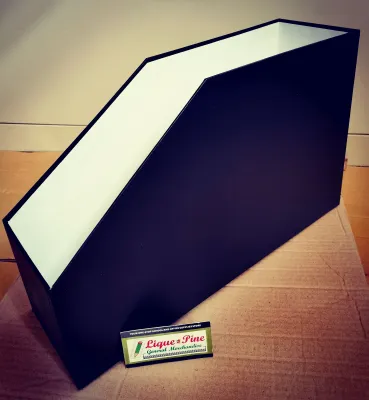
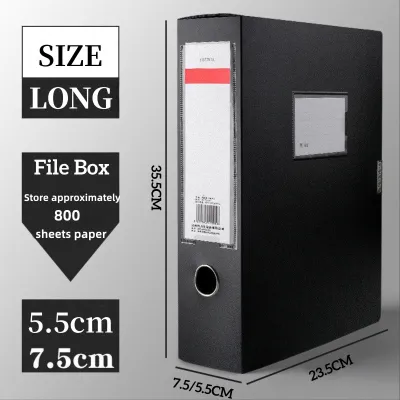
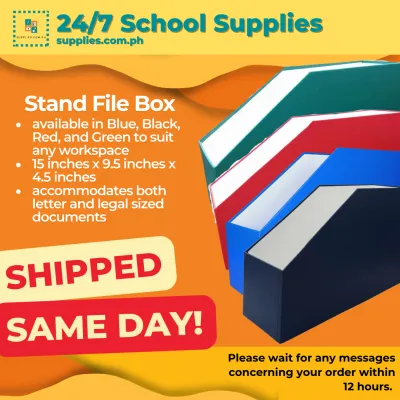
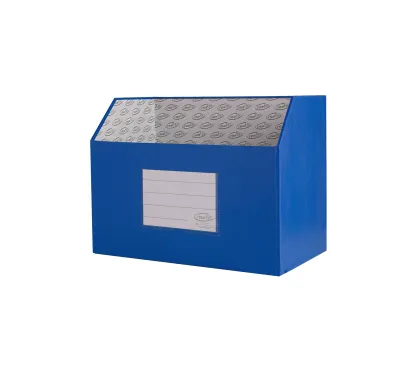
Prices are valid at publication and may change. Please refer to the product page for the latest price.
Finally, consider your mobility requirements. Ask yourself if the organizer will remain stationary on a shelf for years or if you will need to carry it between rooms, offices, or study areas. Stationary storage can prioritize weight and capacity, allowing you to choose heavier, sturdier materials. On the other hand, if you frequently transport your files, you will need to prioritize lightweight designs with secure lids and ergonomic handles that can withstand regular transit.
Choosing a File Box Organizer for Home Study Areas
In a home study area, a file box organizer often sits in a multi-purpose room, such as a bedroom or living room, where visual harmony is just as important as utility. Choosing materials that complement your home decor can prevent your workspace from looking like a sterile corporate archive. Warm wooden boxes, woven fabric bins, or colored plastic organizers can blend seamlessly with residential furniture while keeping your personal documents, bills, and study guides neatly tucked away.

Because home environments are prone to dust, pet dander, and household spills, opting for an enclosed design with a dust-proof lid is highly beneficial. A secure lid keeps your documents clean during long-term storage and allows you to stack multiple boxes to save floor or shelf space. If you choose a fabric organizer, look for options with reinforced cardboard or plastic inserts that maintain their shape over time, preventing the sides from sagging when filled to capacity.
To maximize limited desk space in a home study, look for multi-functional organizers that offer more than just paper storage. Some modern file boxes feature built-in pen cups, small utility drawers, or top lids designed to double as tablet or phone stands. These integrated features help keep your immediate workspace clear of clutter, allowing you to transition your desk from a daytime study zone to a relaxed evening space without moving multiple storage containers.
Finding the Right Storage for School and Dorm Setups
Student life in a shared dorm or boarding house requires storage solutions that are compact, highly portable, and budget-friendly. When moving between classrooms, study halls, and dorm rooms, a lightweight file box organizer with sturdy, integrated handles is essential. Look for designs made from durable polypropylene plastic, which offers an excellent strength-to-weight ratio and can easily survive being packed into a backpack or carried across campus during sudden tropical downpours.
Dorm rooms are notoriously tight on space, meaning vertical or stackable storage is your best ally. Vertical file holders with a small footprint allow you to utilize narrow desk corners or shared shelving units effectively. If you choose stackable plastic crates, ensure they have secure locking latches so they do not slide apart when stacked. This allows you to build a customized vertical filing system that fits neatly under a lofted bed or inside a small wardrobe.
Durability and water resistance are critical for protecting your hard-earned notes, textbooks, and assignments from the humid climate and accidental spills. In busy student environments, drinks get knocked over, and open windows can let in damp air or rain. Choosing a plastic organizer with a tight-fitting lid provides an extra layer of defense against moisture, ensuring your study materials remain dry and legible throughout the school year.
Selecting Professional Filing Solutions for the Office
Corporate and professional office environments demand high-capacity, heavy-duty filing solutions that can handle constant daily use by multiple team members. In these settings, organizers made from reinforced plastic, heavy-gauge steel, or industrial-grade wire mesh are preferred for their structural integrity. These materials resist bending and cracking under the weight of hundreds of documents, ensuring your filing system remains reliable over years of active service.
When selecting an office file box organizer, compatibility with standard filing systems is non-negotiable. You must verify that the internal dimensions perfectly match standard letter or legal-size hanging folders. Many professional offices rely on these hanging systems to keep client files, contracts, and financial records upright and organized. A box with poorly aligned rails or incorrect widths will cause folders to slip off, leading to crumpled documents and disorganized files.
To facilitate team-wide organization and quick document retrieval, look for organizers that feature clear label holders and color-coding options. Being able to slide a printed label into a designated slot on the front of the box saves valuable time during busy workdays. Additionally, choosing stackable boxes with interlocking lids allows your office to expand its storage capacity vertically without risking a collapse, keeping your archives neat, secure, and professional in appearance.
Cross-Scenario Compatibility: Using One Organizer Everywhere
If your work style transitions between home, school, and the office, investing in a highly versatile, cross-scenario file box organizer can save you time and money. A neutral design—such as a matte black, charcoal gray, or clear plastic box—looks equally at home on a corporate desk in BGC, a dorm shelf, or a residential study table. Standardized sizes that accommodate both A4 and letter paper ensure you can carry your work across different environments without needing to transfer documents between different box styles.
However, choosing a universal organizer involves weighing certain trade-offs. A basic, open-top plastic file crate is incredibly versatile and easy to access, but it lacks the dust protection of a lidded home box and the secure portability of a latched student organizer. If you opt for a universal model, look for a middle-ground solution: a durable, lightweight plastic box with a removable lid and fold-down handles. This configuration provides protection and portability when you need it, while easily converting into an open-top desk file holder when stationary.
Planning a modular storage system is an excellent way to manage growing document volumes across different locations. By purchasing identical, stackable file boxes, you can easily reconfigure your storage setup as your needs change. You can start with a single box for your dorm room, add a matching one when you start working from home, and seamlessly integrate both into a professional office setup later on, maintaining a clean and uniform organizational system throughout your career.
Frequently Asked Questions (FAQ)
How do I measure my desk or shelf for a file box organizer?
To ensure a perfect fit, use a tape measure to record the exact width, depth, and height of your target shelf or desk area. Do not just measure the flat surface; check for overhead clearance, especially if the shelf has a lip or if you plan to place the organizer under a low cabinet. You must also account for the extra clearance space required to comfortably pull the box out, lift the lid, or slide hanging folders along the rails without hitting adjacent objects or walls. Finally, compare these space measurements with both the external dimensions of the organizer and its internal dimensions to guarantee your specific paper sizes fit without bending.
Are plastic or metal file boxes better for humid environments?
In humid tropical climates, plastic file boxes are generally superior to metal ones for long-term document protection. High-quality polypropylene or molded plastic is completely impervious to moisture, meaning it will not rust, warp, or degrade when exposed to damp air or seasonal humidity. Metal boxes, while highly durable, can develop rust over time if they lack a specialized rust-proof powder coating, particularly around welded joints or scratches. Regardless of the material you choose, it is essential to conduct regular visual inspections of your storage boxes to check for trapped condensation, musty odors, or early signs of mold, ensuring your valuable papers remain dry and safe.

Community discussion
Share your experience or ask a question. Comments are reviewed before publication.