
For a beginner artist in the Philippines, the most suitable Ohuhu marker set is a dual-tip alcohol-based set featuring a brush and chisel nib combination, ideally in a 48-color or 72-color range. This configuration offers the most versatile entry point for learning essential blending techniques, while the color count provides a balanced palette without requiring a massive upfront investment. In the warm and humid Philippine climate, understanding how these fast-drying alcohol inks interact with different paper types is key to achieving smooth gradients and protecting your workspace.
Selecting your first marker set involves evaluating how different nib shapes, ink types, and paper surfaces work together. By focusing on your specific artistic goals—whether that is character illustration, architectural sketching, or casual journaling—you can choose a set that matches both your creative style and your budget.
Understanding Ohuhu Marker Lines and Nib Configurations
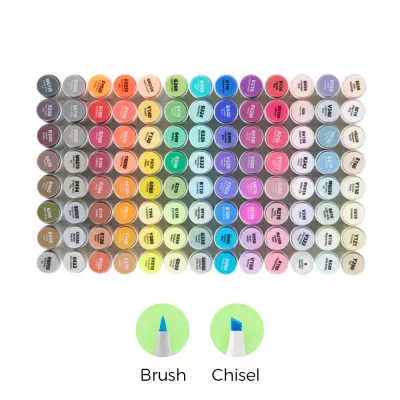
Ohuhu markers are categorized primarily by their physical nib configurations, which dictate the types of lines and blending effects you can achieve. The brush nib is highly flexible and pressure-sensitive, allowing you to transition seamlessly from thin details to broad strokes. This mimicry of a traditional paintbrush makes the brush nib the preferred choice for creating smooth gradients, soft shading, and organic curves.
Products mentioned in this guide
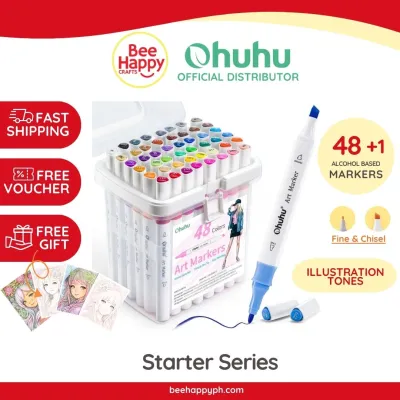
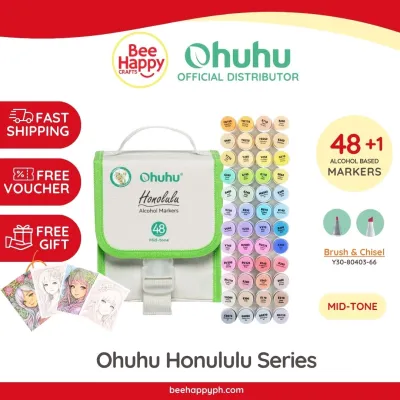
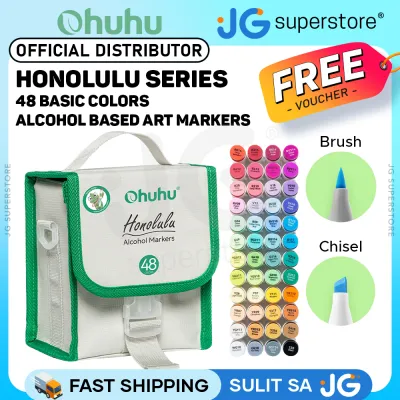
Prices are valid at publication and may change. Please refer to the product page for the latest price.
In contrast, the chisel nib features a wide, flat, angled surface designed for covering large areas with consistent color. By tilting the marker, you can also use the sharp edges of the chisel tip to draw clean, straight lines. The fine bullet nib is a rigid, rounded tip that provides a consistent line width, making it excellent for precise detailing, tight patterns, and outlining before coloring.
Choosing between alcohol-based and water-based ink formulations fundamentally changes your coloring experience. Alcohol-based inks dry almost instantly, which is highly beneficial in humid tropical environments where slow-drying mediums are prone to smudging. These inks are translucent and blend beautifully when layered, though they will bleed through standard paper. Water-based inks dry more slowly, do not bleed through paper as aggressively, and can be blended with water, but they can warp thin paper fibers if over-saturated.
Before committing to a specific marker line, verify the manufacturer’s specifications regarding nib replaceability and ink refill availability. Some Ohuhu series allow you to pull out worn or frayed nibs with tweezers and slide in replacements, which extends the lifespan of your set. Choosing a line that supports official ink refills ensures you can replenish your most frequently used colors individually rather than purchasing an entirely new set when a few markers run dry.
Determining the Ideal Set Size and Color Range
When starting out, balancing your budget with the variety of colors you need is a critical decision. A small starter set of 24 markers is highly portable and affordable, but it often lacks the intermediate shades required to create smooth, seamless color transitions. Beginners may find themselves struggling to blend colors that are too far apart on the color wheel.

A mid-sized set of 48 or 72 markers is generally considered the sweet spot for beginner artists. This range provides a comprehensive selection of primary, secondary, and tertiary colors, along with a useful mix of earth tones and grays. With this variety, you can practice advanced blending techniques and color theory without feeling limited by a sparse palette.
Pay close attention to the inclusion of specialty markers within your chosen set, particularly the colorless blender. This marker contains pure alcohol solvent without pigment, allowing you to soften harsh edges, fade colors to white, and correct minor coloring mistakes. If your primary interest is portraiture or character design, look for sets specifically curated with skin tone palettes or grayscales to ensure you have the subtle, realistic undertones needed for shading.
While purchasing a large pre-selected set of 120 or more colors offers immediate variety at a lower cost per marker, it can be overwhelming for a beginner to organize and master. Starting with a balanced mid-sized set allows you to discover which color families you use most frequently. Over time, you can expand your collection by purchasing individual replacement markers or specialized expansion sets tailored to your evolving style.
Checking Paper Compatibility and Preventing Bleed-Through
Alcohol-based markers do not perform well on standard copy paper or thin sketchbook pages, which absorb ink too quickly and cause colors to feather outside your lines. To achieve smooth blends and vibrant colors, you must pair your markers with compatible paper. Look for heavy cardstock, mixed-media paper, or dedicated marker paper with a weight of at least 200 gsm (grams per square meter).
Coated marker papers are specifically engineered with a barrier that keeps the ink on the surface longer before it dries. This surface retention allows you to blend wet ink together seamlessly without damaging the paper fibers. Highly textured papers, such as rough watercolor paper, should be avoided as they can act like a sponge, draining your markers quickly and fraying the delicate brush nibs.
Because smoothness, bleed resistance, and drying speed depend entirely on the exact combination of marker ink and paper, always perform an observable trial on a scrap piece of your medium. Draw a solid block of color to check if the ink spreads excessively beyond your stroke boundaries. Turn the paper over to observe how much ink saturates through to the back of the sheet.
Since alcohol ink is designed to penetrate paper fibers to some degree, always place a protective barrier sheet beneath your working page. A thin sheet of silicone, a plastic protector, or a few layers of thick scrap cardstock will prevent excess ink from transferring onto subsequent sketchbook pages or staining your desk. This simple precaution is especially important when working in humid conditions where paper may absorb moisture and alter ink behavior.
Building a Conditional Shortlist by Art Style and Use Case
If your primary artistic focus is anime, manga, or character illustration, your selection pathway should prioritize dual-tip sets featuring a brush nib. The flexibility of the brush tip is essential for rendering soft hair highlights, smooth skin gradients, and delicate fabric folds. For this style, look for sets that emphasize pastel tones and include a dedicated range of skin tones to avoid harsh, overly saturated character portraits.
For architectural sketching, industrial product design, or perspective drawing, your needs shift toward precision and structure. A set featuring a chisel and fine bullet nib combination is ideal for these applications, as it allows you to lay down flat, even washes of color for walls and skies while using the fine tip for crisp structural lines and technical details. Grayscale sets (cool, warm, or neutral grays) are particularly valuable here for rendering realistic shadows and metallic textures.
If you plan to use your markers for casual journaling, planner decoration, or mixed-media crafting, water-based markers are often the more practical choice. Because water-based inks do not bleed through standard notebook paper as easily as alcohol inks, you can write and draw on both sides of a page without ruining your layout. This option is also highly suitable for working in tight spaces where the strong scent of alcohol-based solvents might be undesirable.
Purchasing Safely on E-commerce Platforms
To ensure you receive genuine products and reliable customer support, always purchase your marker sets from official brand stores or highly rated, verified sellers on major online marketplaces in the Philippines. Avoid listings with suspiciously low prices, generic brand descriptions, or blurred logos, as these are common indicators of counterfeit goods. Reading recent customer reviews with photo and video feedback can help verify the seller’s authenticity.
Upon delivery, inspect the packaging and physical markers immediately to check for quality and authenticity. Genuine Ohuhu sets arrive in a sturdy, branded carrying case with clean, aligned logo printing, and each marker should have clear color codes and secure caps. Check that the caps fit tightly, as loose caps can lead to dried-out nibs during transit or storage.
Test every single marker in the set on a scrap piece of paper as soon as you unbox them to check for factory defects or dried nibs. If you encounter any dry or damaged markers, document them immediately with photos or videos to utilize the platform’s standard return and refund policies. Most reputable sellers offer a return window for defective items, provided you report the issue promptly before finalizing the transaction.
Frequently Asked Questions (FAQ)
How should beginners store their markers to prevent them from drying out?
Dual-tip markers must always be stored horizontally to ensure that the ink remains evenly distributed between both ends. If stored vertically, gravity will pull the ink down to one tip, leaving the upper nib dry and unusable. Additionally, keep your marker case in a cool, dry place away from direct sunlight and high tropical heat, as excessive warmth can accelerate ink evaporation and degrade the plastic casing over time.
Can you revive an Ohuhu marker that has started to dry out?
To determine if a marker can be revived, first check if the nib is simply clogged with paper fibers or if the ink reservoir is completely empty. If the marker is dry due to low ink, you can replenish it using compatible alcohol-based ink refills by carefully removing the chisel nib with tweezers and dripping ink directly into the barrel. However, if a marker has been left uncapped for an extended period and the internal core has completely hardened, reviving it may not be possible, and replacing the individual marker is the most practical solution.

Community discussion
Share your experience or ask a question. Comments are reviewed before publication.