
Choosing the right notebook is a highly personal decision that directly shapes how you capture ideas, organize daily tasks, and preserve your creative thoughts. When exploring the diverse range of Papelmel notebooks, the ideal choice depends on how you balance physical handling, structural durability, and organizational flexibility. If you prioritize a compact footprint, effortless page-turning, and the ability to fold your notebook completely flat, a spiral-bound notebook is your best match. For those who value a classic, durable archive that sits neatly on a bookshelf and keeps every page permanently secure, a stitched notebook is the traditional choice. Meanwhile, if you prefer a modular system where you can rearrange sections, add refills, and customize your layout on the fly, a loose-leaf binder format offers the ultimate flexibility.
Each binding style brings its own set of tactile experiences and practical advantages. The rustic, eco-friendly aesthetic of Papelmel paper products makes them a beloved staple for students, artists, and professionals alike. However, selecting the wrong format can lead to daily frustrations, such as pages catching in your bag, a binding that resists lying flat, or a bulky cover that crowds your workspace. By understanding the mechanical differences between spiral, stitched, and loose-leaf designs, you can select a notebook that seamlessly integrates into your daily routine.
Understanding Papelmel Binding Options
Spiral binding is defined by a continuous plastic or metal coil that loops through a series of evenly spaced punches along the edge of the paper. This mechanical design offers unparalleled flexibility, allowing you to rotate pages a full 360 degrees. Because the front cover can fold completely behind the back cover, spiral notebooks require only half the desk space of a traditional book-bound journal. This makes them exceptionally convenient for quick note-taking while standing, commuting, or working on cramped surfaces. However, the exposed coil does carry a minor risk of snagging on loose threads, knitwear, or other items when tossed carelessly into a bag. Over time, heavy pressure can also cause metal coils to bend slightly, which may occasionally hinder smooth page-turning.
Products mentioned in this guide
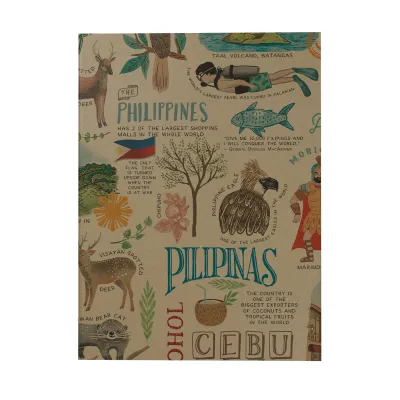
Prices are valid at publication and may change. Please refer to the product page for the latest price.
Stitched binding, often referred to as thread-sewn or book-bound, represents the classic approach to notebook construction. In this format, folded groups of pages—known as signatures—are sewn together with strong thread before being secured to the spine. This method ensures maximum page security, as it is virtually impossible for individual sheets to fall out under normal use. Stitched notebooks offer a clean, professional appearance and a flat spine that is easy to label and stack on a bookshelf. While high-quality stitched bindings are designed to lie relatively flat when open, they do not support 360-degree folding. Writing near the inner margin can sometimes feel slightly restricted, especially when the notebook is brand new and the spine has not yet been broken in.
Loose-leaf formats utilize a multi-ring binder mechanism that allows you to open the rings, insert or remove pages, and snap them shut again. This refillable design is highly modular, giving you the freedom to reorganize your notes, mix different paper styles, and discard unwanted pages without ruining the notebook. It is an excellent choice for long-term projects, academic courses, or multi-subject planning where information needs to be categorized dynamically. The primary trade-off for this flexibility is physical bulk. The ring mechanism and the rigid outer binder require more space in your bag and on your desk than spiral or stitched alternatives, and the rings themselves can sometimes obstruct your hand while writing near the center of the page.
Matching the Format to Your Writing and Study Habits
Your physical writing environment plays a significant role in determining which notebook format will feel most comfortable. In busy classrooms, bustling coffee shops, or compact workspaces across the Philippines, desk space is often limited. A spiral notebook is highly advantageous in these settings because it can be folded in half, allowing you to write comfortably even on a tiny lecture hall tablet arm or a crowded cafe table. Stitched notebooks, by contrast, require their full open width to remain stable, which can feel cumbersome if you are trying to balance a laptop and a notebook simultaneously. Loose-leaf binders demand the most space of all, requiring a flat, stable surface to accommodate the wide cover and the ring mechanism.

Different note-taking systems also align naturally with specific binding types. If you practice bullet journaling or keep a daily diary, a stitched notebook is often the preferred medium. The permanent, chronological nature of a sewn binding prevents you from tearing out pages, preserving a complete and unaltered archive of your personal journey. For highly structured academic systems, such as the Cornell note-taking method, the clean margins of a spiral notebook allow for rapid, uninterrupted writing during fast-paced lectures. If you prefer a highly customized, modular planning system—where you separate your monthly calendar, daily to-do lists, project brainstorms, and sketch pads—the loose-leaf format is unmatched, allowing you to shift pages around as your priorities evolve.
Archiving and long-term storage needs should also influence your decision. Stitched notebooks are built for longevity; their flat, uniform spines sit beautifully on bookshelves, making them easy to organize and reference years down the road. Spiral notebooks are more challenging to archive neatly because the coil side is naturally thicker than the open side, causing them to stack unevenly. They are best utilized for active, temporary projects or single-semester school subjects. Loose-leaf binders offer a unique hybrid solution: you can keep your active notes in a premium binder for daily use, and then transfer completed sections to simple storage rings or folders for long-term archiving, allowing you to reuse the main binder indefinitely.
It is important to remember that physical attributes like paper smoothness, ink absorption, and resistance to bleed-through are not determined by the binding type. Whether you experience feathering or ghosting depends entirely on the paper’s weight, measured in grams per square meter (GSM), and its specific surface treatment. When selecting your notebook, always verify these paper specifications independently rather than assuming a stitched binding automatically guarantees a higher-quality writing surface.
Papelmel Notebook Feature Comparison
To help you quickly evaluate the practical trade-offs of each format, the following table compares the key physical and functional characteristics of spiral, stitched, and loose-leaf options:
| Feature | Spiral Binding | Stitched Binding | Loose-Leaf Format |
|---|---|---|---|
| Lay-Flat Ability | Excellent (supports 360-degree fold) | Good (requires breaking in the spine) | Moderate (rings can obstruct hand) |
| Page Security | Moderate (pages can tear out easily) | Excellent (permanently sewn signatures) | High (pages secure when rings closed) |
| Portability & Weight | Lightweight and compact | Slim and easy to slide into bags | Bulky and heavier due to rings |
| Refillability | Non-refillable | Non-refillable | Highly refillable and customizable |
When shopping, always check the product label or the official online store to verify the specific paper GSM, available ruling options (such as dotted, grid, lined, or blank), and current retail prices in ₱. These specifications can vary significantly across different product lines, seasonal releases, and paper batches. Because tropical humidity can subtly affect how paper fibers absorb ink, conducting a quick trial with your favorite pen on a single sheet is always the most reliable way to ensure a smooth writing experience.
Final Decision Framework: Which Type Should You Choose?
To finalize your decision, consider your primary daily use case and apply these straightforward, condition-based guidelines:
Choose a spiral notebook if your daily routine demands a lightweight, highly portable writing companion. This format is ideal if you frequently write on your lap, stand during field research, or work on small, cluttered desks where saving space is a priority. It is also the best choice if you like the option to cleanly tear out pages to share notes or discard rough drafts without compromising the structural integrity of the rest of the notebook.
Choose a stitched notebook if you want to build a permanent, durable archive of your thoughts, sketches, or professional records. This format is perfect for those who appreciate the traditional feel of a book, value maximum page security, and want a notebook that will sit neatly on a bookshelf for years to come. It is also highly recommended if you dislike the physical sensation of writing over metal coils or binder rings.
Choose a loose-leaf binder if you manage multiple projects, subjects, or planning systems simultaneously and want to keep them all in one place. This format is ideal for those who love to customize their layouts, rearrange sections as their needs change, and minimize paper waste by replacing only the pages they have actually used.
Before purchasing any notebook in bulk, always verify your ink compatibility if you use specialized writing instruments like fountain pens, heavy gel pens, or water-based markers. Check the manufacturer’s paper weight specifications and perform a quick test on an inconspicuous corner of the page. Observing how the paper fibers react to your specific ink will help you avoid frustrating bleed-through and ensure a clean, enjoyable writing experience.
Frequently Asked Questions (FAQ)
Can I mix different paper types in a Papelmel loose-leaf notebook?
Yes, one of the greatest advantages of the loose-leaf format is its modularity. You can easily combine lined paper for writing, grid or dotted paper for diagrams, and blank sheets for sketching within a single binder. However, you must ensure that the punch-hole pattern and spacing perfectly match your specific binder mechanism. Additionally, be mindful of the binder’s maximum ring capacity; overloading the rings can cause pages to tear at the holes or prevent the binder from closing smoothly.
How do I prevent spiral binding from catching on other items in my bag?
Spiral coils can occasionally snag on loose threads, knitted clothing, or delicate items inside your bag. To prevent this, consider storing your spiral notebook inside a dedicated fabric sleeve or a padded compartment within your backpack. Using a notebook with an integrated elastic closure band can also help keep the covers tightly shut, reducing the movement that leads to snagging. While plastic spiral coils tend to bounce back from minor pressure, metal coils can bend permanently if crushed, so avoiding heavy loads on top of your notebook is key to maintaining smooth page-turning.
Is stitched binding better for fountain pen users?
There is a common misconception that stitched notebooks automatically feature higher-quality, fountain-pen-friendly paper. In reality, the binding method and the paper manufacturing process are entirely separate. A stitched notebook can contain thin, highly absorbent paper that causes fountain pen ink to feather and bleed, while a spiral notebook might feature thick, coated paper that handles wet inks beautifully. To ensure compatibility with fountain pens, always look for specific paper indicators such as a higher GSM rating or a smooth, ink-resistant coating, and conduct a quick trial on a single page before writing extensively.

Community discussion
Share your experience or ask a question. Comments are reviewed before publication.